12k+ Research orders shipped.
99.3% Avg. verified purity.
38+ Compounds in catalog.
Built for the lab, not the shelf.

Tesamorelin
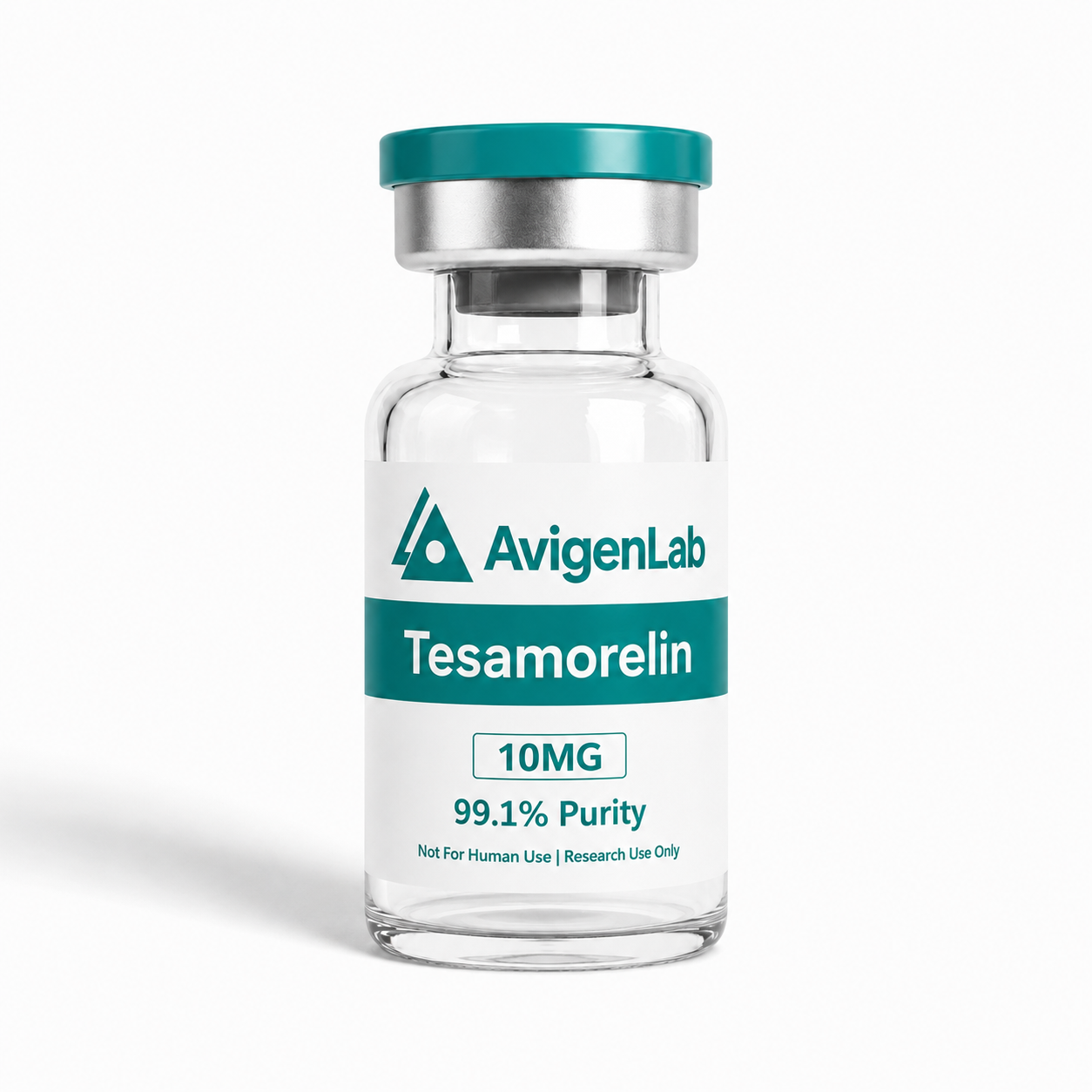
Our 10MG presentation provides a defined synthetic GHRH research peptide carrying a stated 99.1% purity designation. We document the material according to its 44-amino-acid structure, molecular characteristics, vial configuration, endocrine research relevance, and Research Use Only status.
Our 10MG presentation provides a defined synthetic GHRH research peptide carrying a stated 99.1% purity designation. We document the material according to its 44-amino-acid structure, molecular characteristics, vial configuration, endocrine research relevance, and Research Use Only status.
Related products
Description
Tesamorelin 10MG
We provide Tesamorelin as a 10MG synthetic growth hormone-releasing hormone analog with a stated 99.1% purity. Furthermore, its 44-amino-acid structure closely relates to human GHRH while incorporating stabilizing modifications. Consequently, researchers have investigated its effects on growth hormone secretion, IGF-1 signaling, visceral adipose tissue, hepatic fat, and broader metabolic pathways. Published randomized studies have demonstrated effects on visceral adipose tissue and circulating IGF-1 under defined research conditions.
Key Attributes
- Brand: AvigenLab
- Product: 10MG Research Peptide
- Quantity: 10MG
- Stated Purity: 99.1%
- Molecular Type: Synthetic GHRH Analog
- Sequence Length: 44 Amino Acids
- Molecular Formula: C₂₂₁H₃₆₆N₇₂O₆₇S
- Molecular Weight: 5,136 g/mol
- CAS Number: 218949-48-5
- Product Format: Vial
- Classification: Research Use Only
- Human Use: Not For Human Use
Product Overview
The material supports research involving growth hormone-releasing hormone activity, pituitary somatotroph signaling, IGF-1 regulation, visceral adipose tissue biology, and metabolic physiology. Moreover, controlled research has shown that GHRH analog activity can increase endogenous GH secretion while influencing downstream IGF-1 concentrations.
Additionally, randomized clinical research has examined visceral adipose tissue, liver fat, triglycerides, and other metabolic parameters following experimental exposure. Therefore, the compound provides a well-characterized research subject for studying relationships between GH signaling and adipose-tissue metabolism.
Explore additional research materials through our Online Store.
Product Identification
We identify Tesamorelin through its 10MG quantity, stated 99.1% purity, synthetic GHRH analog classification, 44-amino-acid structure, and vial presentation. Furthermore, PubChem records the molecular formula as C₂₂₁H₃₆₆N₇₂O₆₇S and the molecular weight as 5,136 g/mol.
Accordingly, the molecular identity, quantity, purity designation, peptide length, and physical presentation provide clear reference points for laboratory documentation and inventory management.
Tesamorelin Product Category
We classify Tesamorelin within our research peptide collection for endocrine, metabolic, growth-factor, and adipose-tissue investigations. Moreover, its GHRH-related mechanism makes it relevant to studies examining endogenous GH secretion and downstream IGF-1 activity.
Furthermore, published research has investigated the compound in people with abdominal adiposity and HIV-associated lipodystrophy, with multiple randomized trials reporting reductions in visceral adipose tissue.
Tesamorelin Scientific Characteristics
Tesamorelin is a stabilized synthetic analog of growth hormone-releasing hormone containing 44 amino acids. Consequently, its molecular structure allows researchers to examine GHRH-related pituitary signaling within defined experimental systems. PubChem lists its molecular formula as C₂₂₁H₃₆₆N₇₂O₆₇S and molecular weight as 5,136 g/mol.
Meanwhile, GHRH signaling stimulates endogenous GH secretion, which subsequently influences IGF-1 production and related metabolic pathways. Therefore, researchers can examine the relationship between pituitary hormone signaling and downstream metabolic responses.
Tesamorelin Research Applications
We position Tesamorelin for research involving GHRH receptor signaling, growth hormone secretion, pituitary somatotroph activity, IGF-1 regulation, visceral adipose tissue biology, hepatic fat metabolism, and endocrine physiology.
Additionally, randomized research involving abdominally obese subjects reported reductions in visceral adipose tissue alongside increased IGF-1 concentrations. Likewise, studies involving HIV-associated lipodystrophy reported reductions in visceral adipose tissue and improvements in selected lipid parameters.
Nevertheless, research findings depend on the population, experimental design, exposure conditions, and measured endpoints. Accordingly, individual findings should remain within their specific scientific context rather than automatically extending to unrelated research models.
Product Configuration
We provide Tesamorelin in a 10MG vial carrying a stated 99.1% purity designation. Furthermore, the defined quantity, molecular identity, purity specification, and vial presentation establish straightforward reference points for laboratory inventory.
Additionally, the individual-peptide configuration distinguishes this material from combination formulations and other GHRH-related products. Consequently, researchers can organize the product according to its specific molecular identity and physical configuration.
Product Features
The primary features include a 10MG quantity, 99.1% stated purity, 44-amino-acid GHRH analog structure, and clearly defined research-use presentation. Moreover, our product labeling communicates Not For Human Use | Research Use Only.
Furthermore, the research profile encompasses pituitary GH signaling, IGF-1 regulation, visceral adipose tissue research, and metabolic physiology. Therefore, the material provides a defined molecular subject for investigating interconnected endocrine pathways.
Product Specifications
| Specification | Product Information |
|---|---|
| Brand | AvigenLab |
| Product | 10MG Research Peptide |
| Quantity | 10MG |
| Stated Purity | 99.1% |
| Molecular Type | Synthetic GHRH Analog |
| Sequence Length | 44 Amino Acids |
| Molecular Formula | C₂₂₁H₃₆₆N₇₂O₆₇S |
| Molecular Weight | 5,136 g/mol |
| CAS Number | 218949-48-5 |
| Product Format | Vial |
| Research Classification | Research Use Only |
| Human Use Classification | Not For Human Use |
The molecular formula, molecular weight, and CAS number correspond with the chemical identity recorded by PubChem.
Intended Research Context
We identify the material as Research Use Only and Not For Human Use. Accordingly, our documentation focuses on laboratory investigation rather than therapeutic or consumer applications.
In particular, researchers can examine GHRH signaling, pituitary GH release, IGF-1 responses, visceral adipose tissue biology, hepatic fat, and metabolic signaling. Furthermore, published research has demonstrated measurable changes in visceral adipose tissue and IGF-1 within specific controlled study populations.
Nevertheless, these findings do not automatically establish equivalent outcomes across different experimental systems. Therefore, researchers should evaluate observations according to the relevant model, methodology, formulation, and endpoint.
Packaging Information
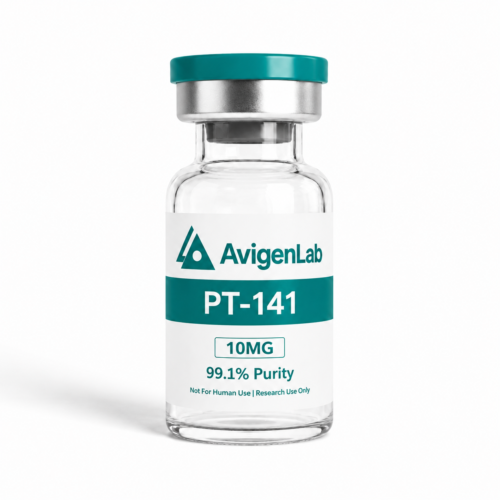
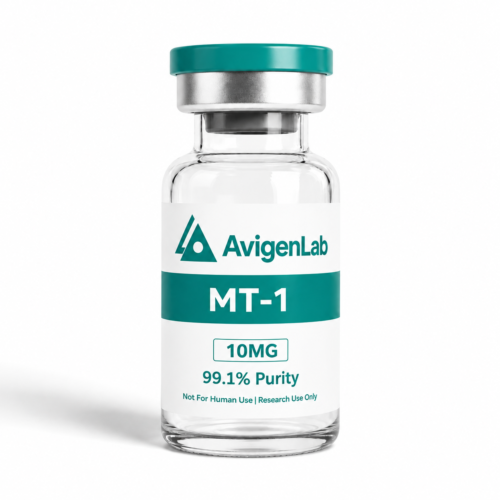
We present the product in a clearly labeled 10MG vial featuring our AvigenLab presentation. The packaging displays the 10MG quantity, stated 99.1% Purity, and Not For Human Use | Research Use Only classification.
Additionally, the vial format provides straightforward identification within our research catalog. You can also explore related materials through our Catalog.
Regulatory Information
We classify the product as Research Use Only and maintain the Not For Human Use designation throughout our product documentation. Accordingly, published research concerning the compound does not constitute regulatory approval for this specific AvigenLab presentation.
Moreover, published literature has evaluated GHRH analogs in controlled human studies and reported effects on visceral adipose tissue, IGF-1, and selected metabolic markers. Consequently, we distinguish documented research findings from broader therapeutic claims.
Storage and Handling
We recommend following the storage and handling conditions specified in the applicable AvigenLab product documentation. Furthermore, researchers should maintain appropriate laboratory handling practices and follow product-specific documentation.
Because peptide stability can depend on formulation, packaging, environmental exposure, and other product-specific variables, we avoid assigning unsupported storage parameters. Consequently, this approach supports consistent laboratory management without introducing assumptions about conditions that may vary between formulations.
Market Availability
Our 10MG presentation provides a defined research peptide configuration within our collection. The quantity, stated purity, molecular identity, 44-amino-acid classification, vial format, and Research Use Only designation create clear reference points for laboratory inventory.
Moreover, the compound has a substantial research history within endocrinology and metabolic science. Likewise, randomized trials have investigated its effects on visceral adipose tissue, lipid parameters, hepatic fat, and IGF-1 concentrations.
Product Reference
Our 10MG presentation provides a defined synthetic GHRH research peptide carrying a stated 99.1% purity designation. We document the material according to its 44-amino-acid structure, molecular characteristics, vial configuration, endocrine research relevance, and Research Use Only status.
Consequently, the product provides researchers with a clearly identified material for investigating GHRH signaling, pituitary somatotroph activity, GH secretion, IGF-1 regulation, visceral adipose tissue biology, and related metabolic mechanisms. Furthermore, the extensive published research surrounding the compound provides a strong scientific reference base for continued investigation into the interaction between GH signaling and adipose-tissue metabolism.
For additional product information, researchers can also visit our Shop.



Reviews
There are no reviews yet.