
GLP-RT
In particular, GLP-3/Reta can support research involving receptor pharmacology, incretin signaling, glucagon pathways, metabolic regulation, glucose homeostasis, appetite-associated mechanisms, and energy balance. Moreover, the scientific literature has examined retatrutide across both preclinical and clinical research settings.
Description
GLP-3/Reta 10MG
We provide GLP-RT as a 10MG research peptide with a stated 99.1% purity. Furthermore, GLP-3/Reta refers to retatrutide, an investigational triple agonist designed to activate the GIP, GLP-1, and glucagon receptors. Consequently, researchers have investigated GLP-RT in relation to incretin signaling, glucose regulation, energy balance, appetite pathways, and metabolic physiology. Retatrutide is also known as LY3437943 and has been characterized as a single peptide capable of activating all three receptor systems.
Key Attributes
- Brand: AvigenLab
- Product Name: GLP-3/Reta
- Active Compound: Retatrutide
- Quantity: 10MG
- Stated Purity: 99.1%
- Molecular Type: Synthetic Peptide
- Peptide Length: 39 Amino Acids
- Receptor Activity: GIP, GLP-1, and Glucagon Receptor Agonist
- Alternative Name: LY3437943
- CAS Number: 2381089-83-2
- Product Format: Vial
- Classification: Research Use Only
- Human Use: Not For Human Use
PubChem identifies retatrutide as a triple peptidic agonist targeting GCGR, GIPR, and GLP-1R, while current pharmacological references describe its lipidated and structurally modified peptide design.
GLP-3/Reta Product Overview
We provide GLP-RT for research involving triple incretin and glucagon receptor signaling. Moreover, simultaneous activation of GIP, GLP-1, and glucagon receptors gives this peptide a distinct research profile compared with single- and dual-receptor agonists. Consequently, researchers can investigate interconnected pathways involving glucose-dependent insulin secretion, glucagon signaling, energy expenditure, food intake, and metabolic regulation.
Additionally, clinical research has investigated retatrutide as a triple-hormone-receptor agonist, with Phase 2 research demonstrating substantial effects on body weight alongside changes in several cardiometabolic measures. Nevertheless, those findings come from clinical research involving the investigational compound and should remain distinct from the specifications of this research presentation.
Researchers can explore additional materials through our Online Store.
Product Identification
We identify GLP-3/Reta through its 10MG quantity, stated 99.1% purity, retatrutide identity, and vial presentation. Furthermore, the active compound is also identified by the development designation LY3437943. Accordingly, these identifiers provide clear reference points for laboratory inventory, catalog organization, and molecular documentation.
Product Category
We classify GLP-RT within our research peptide collection for metabolic, endocrine, incretin, receptor-signaling, and energy-homeostasis investigations.
Moreover, the three targeted receptors participate in complementary physiological pathways. GIP and GLP-1 signaling contribute to incretin-mediated metabolic regulation, while glucagon receptor activation contributes to pathways associated with energy expenditure and substrate metabolism. Therefore, the combined receptor profile makes this peptide particularly relevant to research examining multi-receptor metabolic signaling.
You can review related materials through our Catalog.
Scientific Characteristics
GLP-3/Reta represents a structurally modified peptide designed around simultaneous activity at three hormone receptors. In particular, PubChem records retatrutide as a lipidated peptide with modified amino acids intended to optimize its pharmacological characteristics. Furthermore, current pharmacology references describe the compound as activating GCGR, GIPR, and GLP-1R in vitro.
Meanwhile, the triple-agonist design provides a useful research framework for examining how GIP, GLP-1, and glucagon signaling can interact within metabolic systems. Consequently, researchers can investigate receptor-specific responses as well as combined downstream effects.
Research Applications
We position GLP-3/Reta for research involving GIP receptor signaling, GLP-1 receptor activity, glucagon receptor pathways, incretin biology, glucose homeostasis, insulin signaling, appetite regulation, energy expenditure, and metabolic physiology.
Additionally, retatrutide has been investigated in controlled clinical research for obesity and metabolic outcomes. The Phase 2 trial published in the New England Journal of Medicine described the compound as an agonist of the glucose-dependent insulinotropic polypeptide, glucagon-like peptide 1, and glucagon receptors.
Furthermore, researchers have examined how simultaneous receptor activation may influence energy intake, substrate utilization, and energy expenditure. Accordingly, the compound offers a defined molecular subject for investigating multi-pathway metabolic signaling.
Product Configuration
We provide GLP-3/Reta in a 10MG vial carrying a stated 99.1% purity designation. Accordingly, the defined quantity, active-compound identity, purity specification, and vial presentation establish straightforward reference points for laboratory inventory.
Additionally, this individual-peptide configuration distinguishes the product from combination products containing separate active compounds. Therefore, researchers can organize the material according to its molecular identity, quantity, purity, and physical presentation.
Product Features
The primary features include a 10MG quantity, 99.1% stated purity, triple GIP/GLP-1/glucagon receptor activity, synthetic peptide structure, and clearly defined research-use presentation.
Moreover, our product label communicates Not For Human Use | Research Use Only. Furthermore, the triple-receptor profile makes the material relevant to investigations spanning incretin signaling, glucagon biology, glucose regulation, appetite-related pathways, and energy-homeostasis research.
Consequently, GLP-3/Reta provides researchers with a defined molecular subject for controlled investigation of interconnected metabolic mechanisms.
Product Specifications
| Specification | Product Information |
|---|---|
| Brand | AvigenLab |
| Product Name | GLP-3/Reta |
| Active Compound | Retatrutide |
| Quantity | 10MG |
| Stated Purity | 99.1% |
| Molecular Type | Synthetic Peptide |
| Peptide Length | 39 Amino Acids |
| Receptor Targets | GIPR, GLP-1R, GCGR |
| Receptor Profile | Triple Agonist |
| Development Name | LY3437943 |
| CAS Number | 2381089-83-2 |
| Product Format | Vial |
| Research Classification | Research Use Only |
| Human Use Classification | Not For Human Use |
PubChem identifies retatrutide under LY3437943 and records its activity at the glucagon, GIP, and GLP-1 receptors.
Intended Research Context
We classify the material as Research Use Only and Not For Human Use. Accordingly, our documentation focuses on laboratory investigation rather than consumer or therapeutic applications.
In particular, GLP-3/Reta can support research involving receptor pharmacology, incretin signaling, glucagon pathways, metabolic regulation, glucose homeostasis, appetite-associated mechanisms, and energy balance. Moreover, the scientific literature has examined retatrutide across both preclinical and clinical research settings.
Nevertheless, researchers should interpret findings according to the specific experimental model, formulation, exposure conditions, and measured endpoint.
Packaging & Product Reference
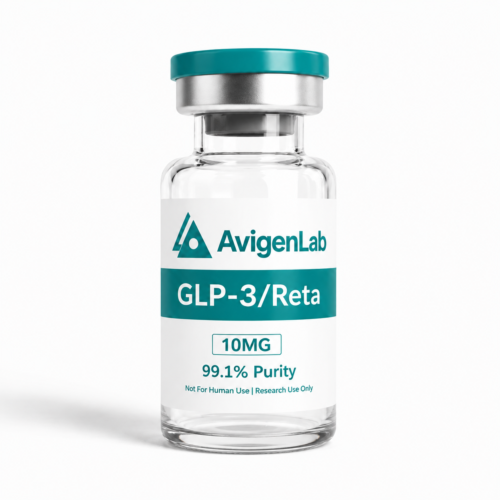
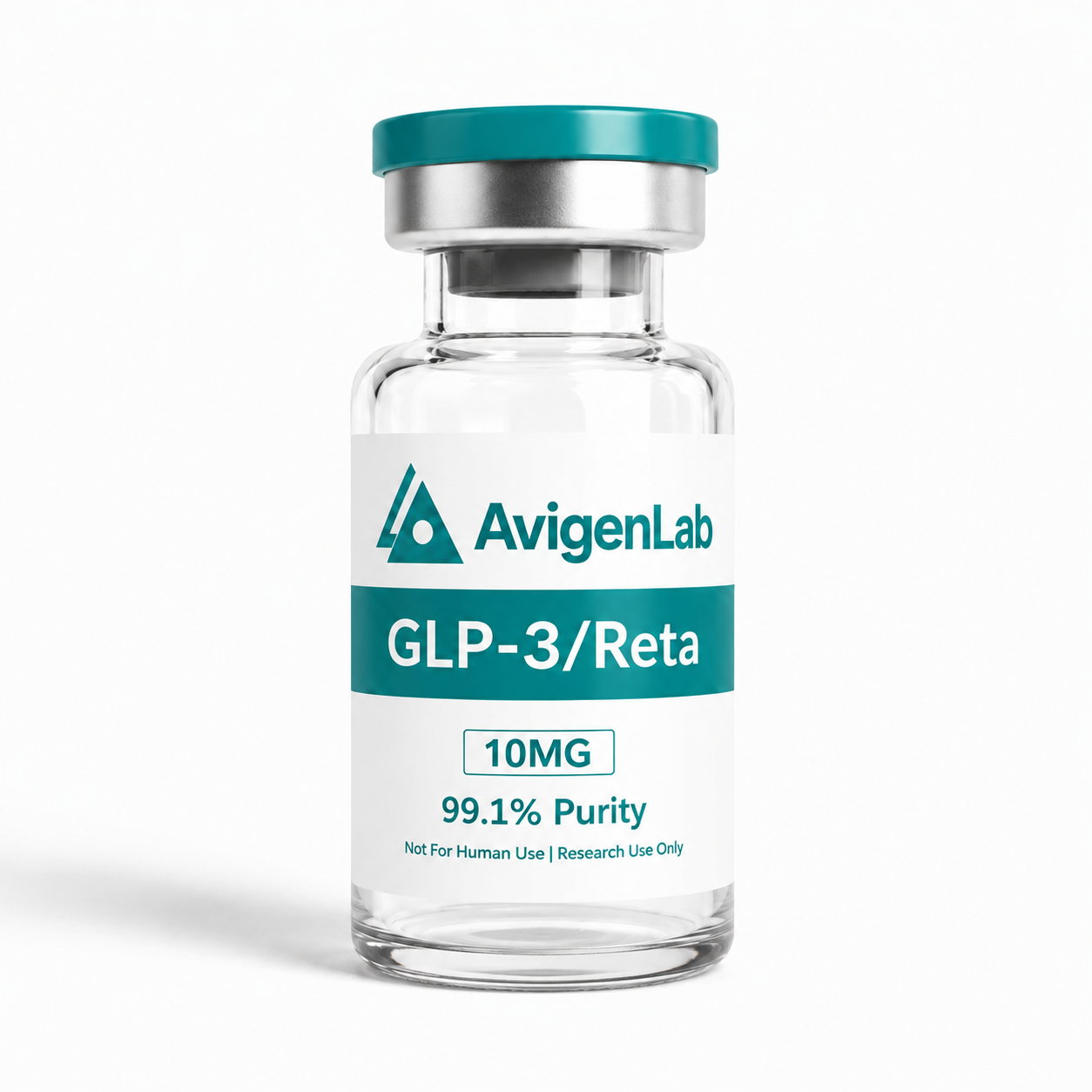
We present GLP-3/Reta in a clearly labeled 10MG vial featuring our AvigenLab product presentation. The packaging displays the 10MG quantity, communicates the stated 99.1% Purity, and identifies the material as Not For Human Use | Research Use Only.
Furthermore, our documentation identifies the material according to its retatrutide composition, triple-receptor activity, peptide classification, quantity, and stated purity. Consequently, researchers have clear reference points when organizing laboratory materials and comparing multi-receptor metabolic compounds.
For additional product information, researchers can visit our Shop.
Related products
Reviews
There are no reviews yet.