12k+ Research orders shipped.
99.3% Avg. verified purity.
38+ Compounds in catalog.
Built for the lab, not the shelf.

SEMAX
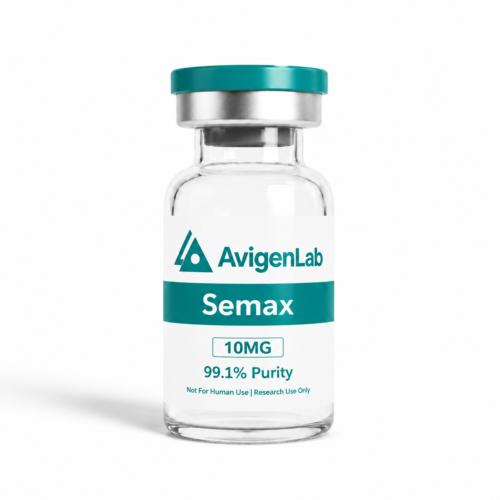
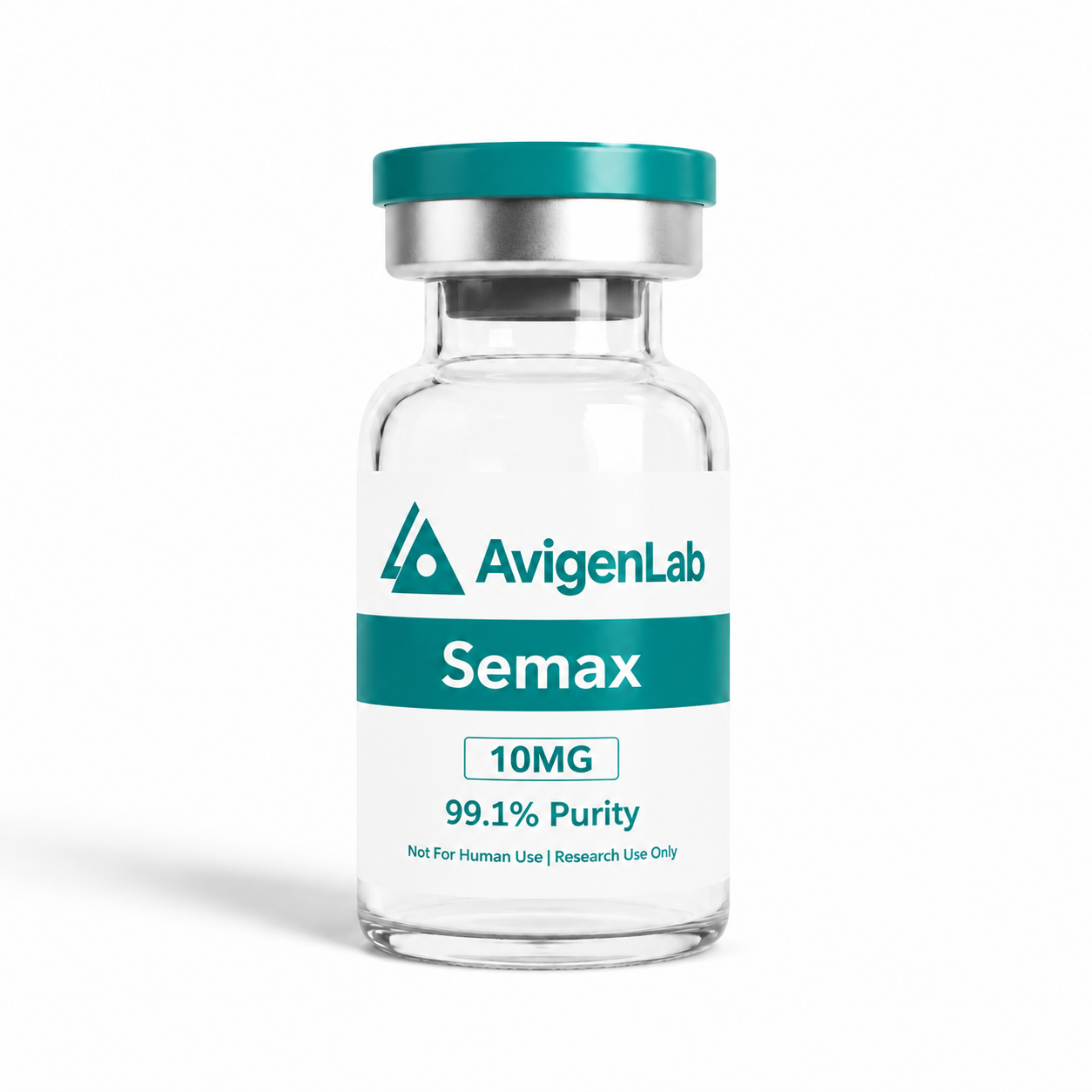
Our 10MG presentation provides a defined research peptide configuration within our product collection. The product name, quantity, stated purity, seven-amino-acid sequence, vial format, and Research Use Only designation create clear reference points for laboratory inventory.
Our 10MG presentation provides a defined research peptide configuration within our product collection. The product name, quantity, stated purity, seven-amino-acid sequence, vial format, and Research Use Only designation create clear reference points for laboratory inventory.
Related products
Description
Semax 10MG
We provide Semax as a 10MG synthetic heptapeptide research compound with a stated 99.1% purity. Furthermore, this seven-amino-acid peptide consists of the sequence Met-Glu-His-Phe-Pro-Gly-Pro (MEHFPGP) and represents an analog of the ACTH(4–10) fragment. Consequently, researchers have investigated its relationship with neurotrophin expression, neuronal signaling, dopaminergic pathways, serotonergic activity, and broader neuropeptide biology.
Semax Key Attributes
- Brand: AvigenLab
- Product Name: Semax
- Quantity: 10MG
- Stated Purity: 99.1%
- Molecular Type: Synthetic Heptapeptide
- Sequence: Met-Glu-His-Phe-Pro-Gly-Pro
- Sequence Length: 7 Amino Acids
- Molecular Formula: C₃₇H₅₁N₉O₁₀S
- Molecular Weight: 813.9 g/mol
- Product Format: Vial
- Classification: Research Use Only
- Human Use: Not For Human Use
Semax Product Overview
We provide Semax for research involving neuropeptide signaling, neurotrophic pathways, neuronal biology, and cognitive neuroscience. Moreover, experimental research has examined changes in brain-derived neurotrophic factor (BDNF) and nerve growth factor (NGF) expression following exposure to the peptide. Studies have reported changes in these neurotrophin pathways in specific brain regions and experimental conditions.
Additionally, researchers have investigated relationships between the peptide and dopaminergic and serotonergic systems. Therefore, its research profile extends beyond a single biological pathway and encompasses several interconnected mechanisms involved in neuronal signaling.
You can explore additional research materials through our Online Store.
Semax Product Identification
We identify Semax as a 10MG research peptide carrying a stated 99.1% purity designation. Furthermore, PubChem identifies the peptide sequence as MEHFPGP, corresponding to Met-Glu-His-Phe-Pro-Gly-Pro, with a molecular formula of C₃₇H₅₁N₉O₁₀S and molecular weight of approximately 813.9 g/mol.
Accordingly, its sequence, molecular characteristics, quantity, purity designation, and vial presentation provide clear reference points for laboratory documentation and inventory management.
Product Category
We classify the material within our research peptide collection for neurobiology and biochemical investigation. Accordingly, its scientific profile encompasses neurotrophin signaling, neuronal responses, neurotransmitter pathways, and peptide-mediated cellular regulation.
Moreover, published studies describe the compound as an ACTH(4–10) analog and have investigated its effects on BDNF and TrkB expression in experimental models. Consequently, researchers can use this molecular framework to examine relationships between peptide signaling and neurotrophic regulation.
Scientific Characteristics
Semax is a synthetic seven-amino-acid peptide with the sequence Met-Glu-His-Phe-Pro-Gly-Pro. In particular, its molecular structure corresponds to the ACTH(4–7) sequence extended with a Pro-Gly-Pro component. Therefore, its defined sequence distinguishes it from other ACTH-derived peptide structures.
Furthermore, experimental studies have examined rapid changes in BDNF and NGF gene expression following administration. Meanwhile, research has observed different expression patterns across the hippocampus, frontal cortex, brainstem, cerebellum, and retina, demonstrating the importance of experimental tissue and timing when interpreting results.
Research Applications
We position Semax for research involving BDNF expression, NGF expression, neurotrophic signaling, dopaminergic pathways, serotonergic activity, neuronal plasticity, and cognitive neuroscience.
Additionally, research has examined its relationship with the BDNF/TrkB system. One experimental study reported increased BDNF protein and TrkB phosphorylation in the rat hippocampus following administration, while other studies examined changes in BDNF and NGF gene expression across different brain regions.
Likewise, researchers have investigated the peptide’s influence on neurotransmitter-related mechanisms. Nevertheless, experimental outcomes can vary according to model, concentration, administration conditions, timing, and measured endpoint. Therefore, individual findings should remain within their appropriate research context.
Product Configuration
We provide the material in a 10MG vial with a stated 99.1% purity designation. Moreover, the defined quantity, peptide identity, sequence, purity specification, and physical presentation create straightforward reference points for laboratory inventory and research documentation.
Additionally, the vial format provides a distinct configuration within our peptide collection. Consequently, researchers can distinguish this presentation from spray-based or differently configured peptide products through its defined quantity and packaging format.
Product Features
The primary features include a 10MG quantity, 99.1% stated purity, synthetic heptapeptide structure, and clearly defined MEHFPGP sequence. Furthermore, the product label communicates Not For Human Use | Research Use Only, supporting clear research classification.
Moreover, its scientific profile encompasses several interconnected neurobiological pathways. Researchers have investigated neurotrophin expression, BDNF/TrkB signaling, NGF regulation, and neurotransmitter-associated mechanisms. As a result, the material provides a defined molecular subject for experimental neuroscience research.
Product Specifications
| Specification | Product Information |
|---|---|
| Brand | AvigenLab |
| Product Name | Semax |
| Quantity | 10MG |
| Stated Purity | 99.1% |
| Molecular Type | Synthetic Heptapeptide |
| Sequence | Met-Glu-His-Phe-Pro-Gly-Pro |
| Sequence Length | 7 Amino Acids |
| Molecular Formula | C₃₇H₅₁N₉O₁₀S |
| Molecular Weight | 813.9 g/mol |
| Product Format | Vial |
| Research Classification | Research Use Only |
| Human Use Classification | Not For Human Use |
The molecular sequence, formula, and molecular weight correspond with the chemical identity documented by PubChem.
Intended Research Context
We identify the material as Research Use Only and Not For Human Use. Accordingly, our documentation focuses on laboratory investigation rather than therapeutic or consumer applications.
In particular, researchers can examine the peptide within experimental systems involving neurotrophic signaling, neuronal responses, BDNF and NGF expression, neurotransmitter pathways, and peptide-mediated cellular mechanisms. Furthermore, published research has examined these processes primarily through cellular and animal models.
Nevertheless, experimental findings do not automatically establish clinical outcomes. Therefore, research observations should remain connected to their specific experimental model, methodology, and measured endpoint.
Packaging Information
We present the product in a clearly labeled 10MG vial featuring our AvigenLab product presentation. The packaging identifies the compound, displays the 10MG quantity, and communicates the stated 99.1% Purity designation.
Additionally, the label communicates Not For Human Use | Research Use Only. Therefore, the packaging provides straightforward product identification while supporting consistent laboratory inventory and catalog organization.
Regulatory Information
We classify the product as Research Use Only and maintain the Not For Human Use designation throughout our product documentation. Accordingly, scientific publications concerning the peptide do not constitute regulatory approval for this specific AvigenLab presentation.
Moreover, published literature describes the compound primarily through experimental neurobiology and peptide research. Consequently, we focus our documentation on molecular identity, scientific characteristics, research applications, and product specifications without presenting experimental observations as regulatory or clinical endorsements.
Storage and Handling
We recommend following the storage and handling conditions specified in the applicable AvigenLab product documentation. Because peptide stability can depend on formulation, packaging, environmental exposure, and other product-specific variables, we avoid assigning unsupported storage parameters.
Furthermore, researchers should maintain appropriate laboratory handling practices and follow the product-specific documentation associated with the material. Consequently, this approach supports consistent laboratory management without introducing assumptions about conditions that may vary between formulations.
Market Availability
Our 10MG presentation provides a defined research peptide configuration within our product collection. The product name, quantity, stated purity, seven-amino-acid sequence, vial format, and Research Use Only designation create clear reference points for laboratory inventory.
Moreover, the compound has an established research history spanning neurotrophin biology, neuronal signaling, and experimental cognitive neuroscience. Likewise, continued investigation into BDNF, NGF, and related pathways keeps the peptide relevant to contemporary neurobiology research.
Product Reference
Our Semax 10MG provides a defined synthetic heptapeptide with a stated 99.1% purity designation. We document the material according to its MEHFPGP sequence, molecular characteristics, product configuration, research applications, and Research Use Only classification.
Consequently, the product provides researchers with a clearly characterized material for investigating BDNF and NGF expression, neurotrophic signaling, neuronal responses, and related neurotransmitter pathways. Furthermore, continued experimental research examines how this ACTH(4–10)-related peptide interacts with interconnected neurobiological systems across different research models.



Reviews
There are no reviews yet.